
We’re opening a primary school in September 2026!
Location: Domaniewska 48, Warsaw
Our vision
The world in which our children are growing up is changing faster than ever before.
That’s why we’re creating a bilingual school that teaches children not only knowledge, but also thinking, communication, cooperation, independence, and courage to act. Our programme develops meta-skills that enable children to learn throughout their lives.
“From small questions to big projects.
From curiosity to future competencies.
We teach with the future in mind.”
Enrolment is open
Fill in the formBilingualism
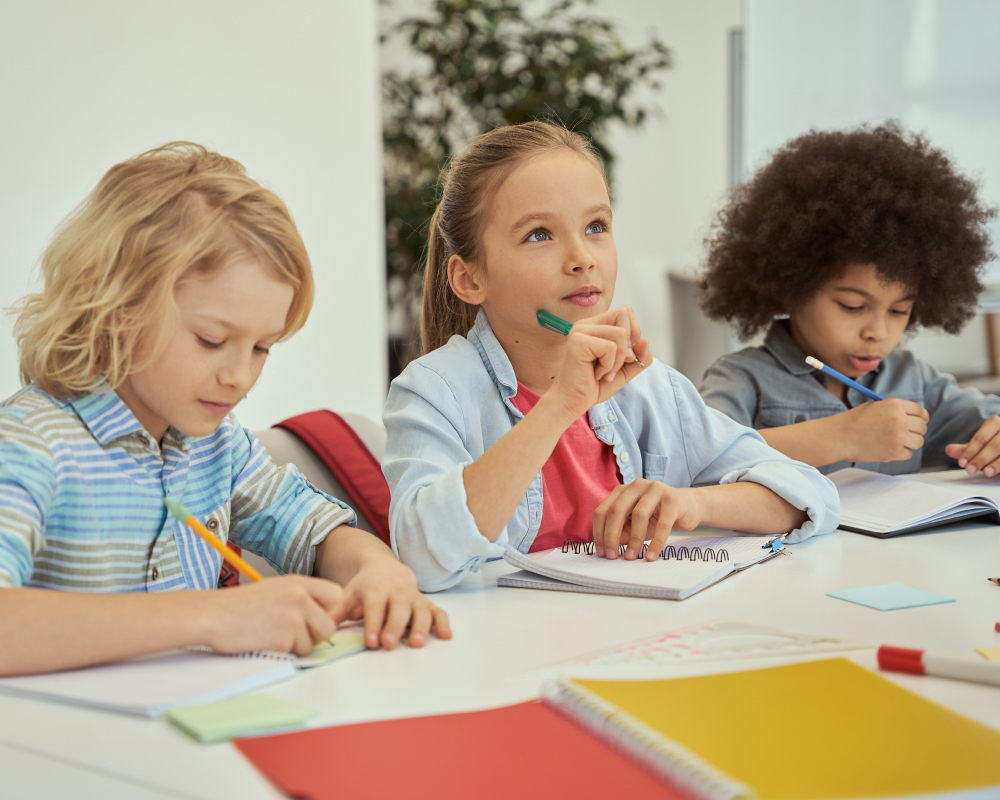
For us, bilingualism is a modern approach that allows children to get more from the world around them. It’s an open mindset and a way of communicating, as well as an international everyday reality for our students. In the future, it will open up opportunities that make full use of their potential.
We don’t teach the language — we teach through the language, dedicating at least 10 hours a week to this.
Using the “one person — one language” method, children immerse themselves in two languages — Polish and English — every day, in a natural, inspiring, and engaging way.
How do we do it?
Our approach combines bilingualism with the development of meta-skills — abilities that help children learn, think, and act with confidence throughout their lives.
- Language immersion — English is naturally present in everyday lessons, projects, and communication.
- CLIL (Content and Language Integrated Learning) — we teach maths, science, and art in English, developing thinking in both languages simultaneously.
- Team Teaching — each class is led by a team of Polish- and English-speaking teachers who work together to create a coherent learning environment.
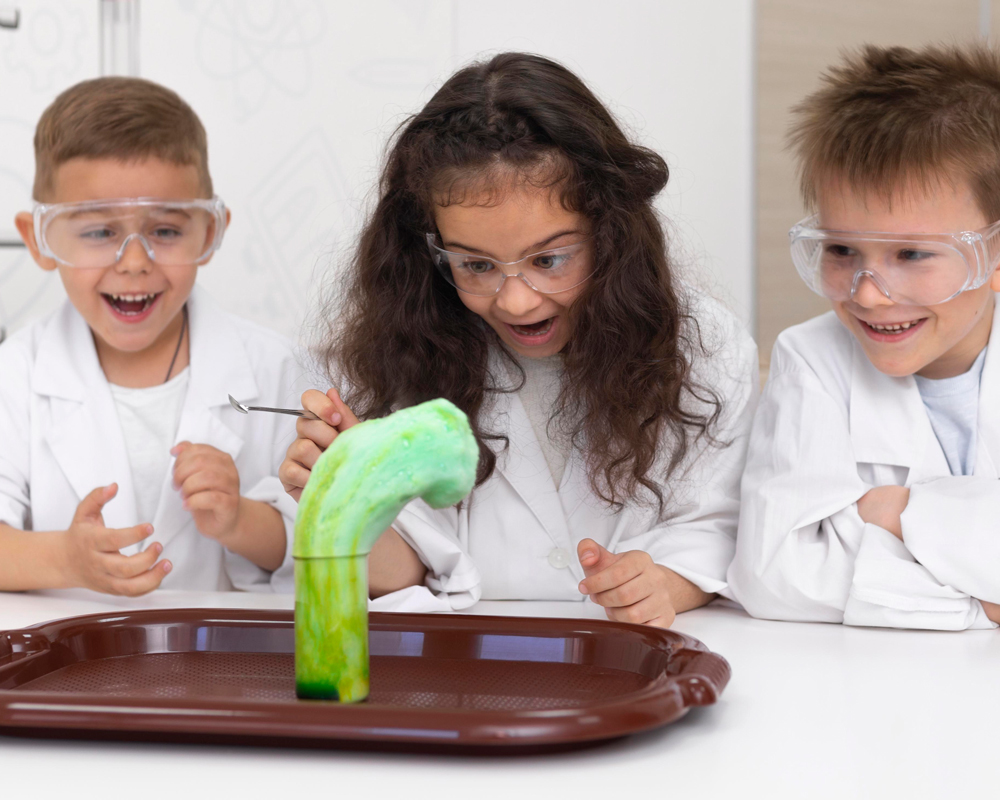
- Bilingual STEAM projects — learning through hands-on activities, experiments, and creative projects that connect science, technology, art, and logic.
- Extra-curricular activities — conducted in both Polish and English, including Drama & Speaking, Coding & Robotics, Art, Science, and Debate Club.
Through this, children develop future meta-skills — curiosity, reflection, cooperation, and independence — that will give them an edge in education and life.
Open Days
Visit us during our Open Days or let’s talk today!
Can’t make it to the event? Call us and arrange an individual appointment.
Curriculum and Learning Objectives
We follow the Polish national curriculum enriched with elements of the Cambridge International Programme, combining the best of national and international education.
Our teaching is based on modern methods that develop curiosity, independence, and creativity:
- STEAM — integrating science, technology, engineering, arts, and mathematics through practical projects.
- Project-Based Learning — learning through action, discovery, and creation.
- Design Thinking — fostering empathy, creative thinking, and courage in solving problems.
- Reflection and self-assessment — building pupils’ self-awareness and responsibility for their own development.
- Multisensory learning and teamwork — exploring the world actively through all senses and learning to cooperate.
We believe that a child who understands, experiences, and feels learns faster, more effectively, and with greater joy.
Meta-skills
In the early years of primary education, including Years 0–3 (approx. ages 6–9), a child’s brain and personality develop in a way that forms the foundation for all future learning.
The key is not “delivering more content” but strengthening the inner abilities that make learning, building relationships, and personal growth possible. If we treat these as meta-skills, then subjects like mathematics, science or even financial education become tools for shaping them — not an end in themselves.
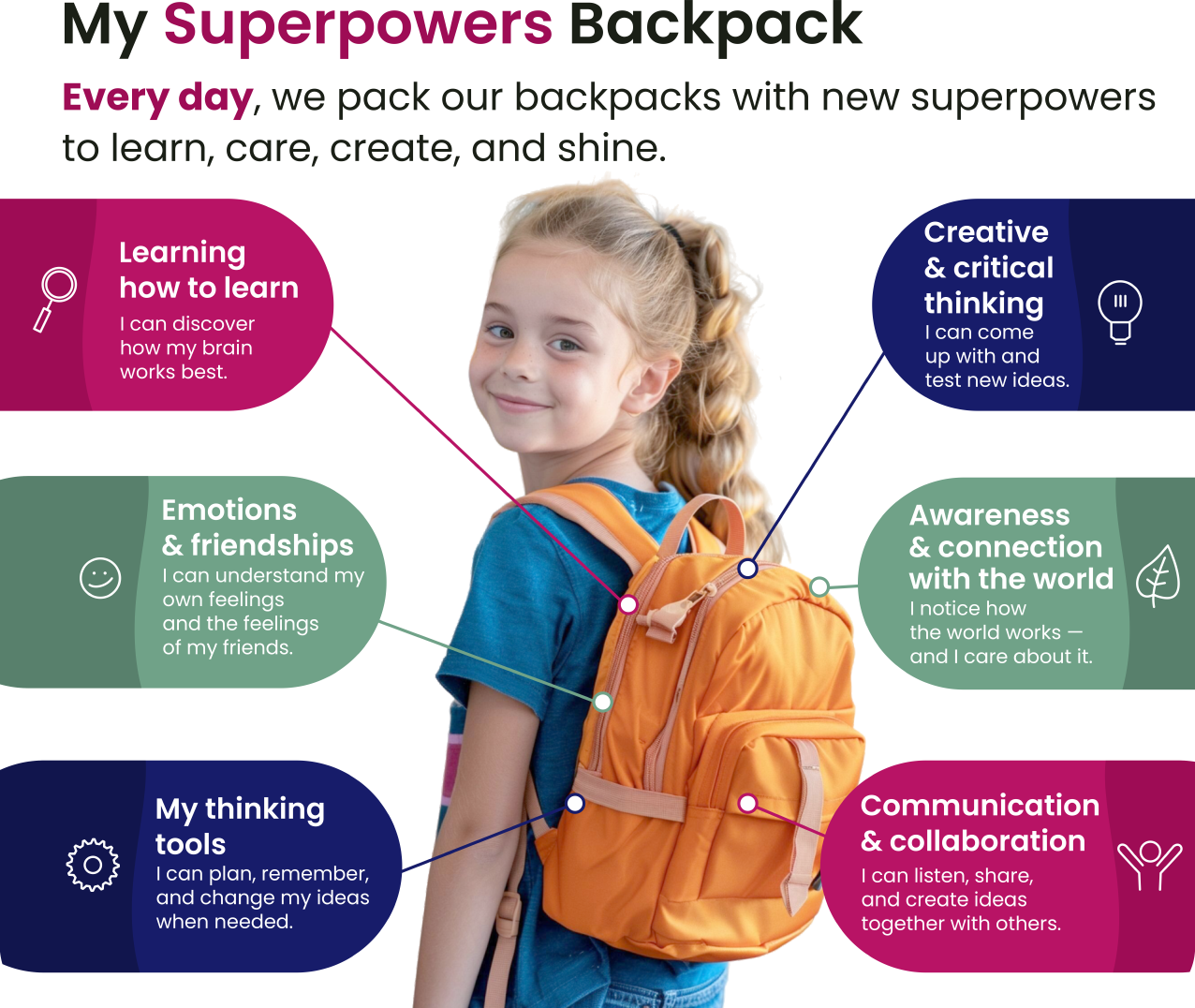
The most important meta-skills at this age often overlap, yet they can be grouped into several key areas.
Learning
1/7
Learning How to Learn
Every child is born with natural curiosity, but not every child knows how to learn. In our school, we teach children to understand their own process of exploring the world — so that they are not solely dependent on the teacher, but become independent discoverers.
Why does it matter?
The ability to learn is the foundation of all other competences, because a child who knows themselves as a learner can cope in any field — today and in the future.
Key competences
- Curiosity and questioning — a sense of safety and encouragement to ask “why?”
- Attention control — building the ability to focus and reject distractions (linked to self-regulation)
- Metacognition — noticing “what helps me learn” and “what I find difficult”
- Growth mindset — seeing mistakes as a natural part of learning, not as failure
- Positive discipline — developing good habits and realistic goals (“1% better every day” attitude)

Emotions and empathy
2/7
Emotional and social development — the foundation of education
Emotional and social development is an integral part of the programme. We teach how to understand oneself and others, how to build relationships, cooperate, and resolve conflicts.
Reflection is a constant element of the process — children learn to recognise emotions, analyse their actions, and consciously guide their growth. The teacher acts as a mentor and guide, supporting the child in discovering their strengths and dealing with challenges.
Why does it matter?
Emotional self-regulation and empathy are the foundations of cooperation, confidence, and mental wellbeing.
Key competences
- Self-regulation — naming emotions, calming down, waiting patiently without frustration
- Empathy and perspective-taking — recognising that others may think and feel differently
- Conflict resolution — using words instead of impulses to solve disputes
- Sense of belonging — understanding that everyone has value and a place
- Building relationships — forming positive connections with peers
Flexible thinking
3/7
Creative & Critical Thinking
In a world full of ready-made answers, those who achieve the most are the ones who can ask better questions. That’s why our school isn’t about reproducing information but about creating, analysing, and questioning. We teach children to look at problems from different perspectives — sometimes logically, sometimes creatively — because true innovation is born where reasoning meets imagination.
Why does it matter?
The world rewards flexible thinkers, not those who only memorise facts.
Key competences
- Imagination and divergent thinking — generating multiple possible ideas
- Problem solving — trying strategies, testing, improving
- Pattern recognition — seeing connections in history, maths, or nature
- Narrative thinking — the ability to tell stories, structure thoughts, and express ideas
Agency
4/7
Agency & Independence
A child who believes they can influence their own actions and decisions will grow into an adult who acts rather than waits. That’s why, even in the early school years, we build a sense of “I can, I have an impact, I can handle it”. Instead of doing things for children — we teach them to plan. Instead of saying “do this” — we ask “how would you solve it?”. True independence comes not from control but from trust.
Why does it matter?
At this stage, children begin to see themselves as capable and responsible individuals.
Key competences
- Sense of responsibility for tasks — completing activities without constant supervision
- Decision-making — choosing and observing consequences
- Perseverance — continuing despite difficulties
- Asking for help appropriately — recognising when support is needed
World awareness
5/7
Awareness & Connection with the World
Children naturally ask questions about the world — where things come from, why people are different, what will happen if…
We turn this curiosity into mindfulness and responsibility. We teach them to look more broadly: to notice not only me but also us. Education is not only about intellectual growth — it’s also about building relationships with nature, culture, and other people.
Why does it matter?
Children who feel connected to nature, people, and culture develop empathy and a sense of purpose.
Key competences
- Curiosity about the world — exploring surroundings and communities
- Cultural awareness — understanding diversity and fairness
- Ecological sensitivity — noticing and caring for nature
- Sense of responsibility for the community — understanding that my actions have an impact
Communication and cooperation
6/7
Communication & Collaboration
Children are born with a need for connection — first through gestures and emotions, later through words, movement, and art. At school, we teach them that communication is not only about speaking, but also about listening, understanding, and acting together. In the future, it won’t be those who know the most who succeed — but those who can connect and create with others.
Why does it matter?
The ability to share ideas, listen, and work in a team is the foundation of social and professional life.
Key competences
- Listening to understand — not just waiting for one’s turn
- Presentation skills — expressing oneself through words, movement, image, or in two languages
- Teamwork — sharing roles and supporting others
- Respectful discussion — saying “I see it differently” instead of “you’re wrong”
- Supportive leadership — leading through cooperation, not domination
Executive functions
7/7
Executive Functioning
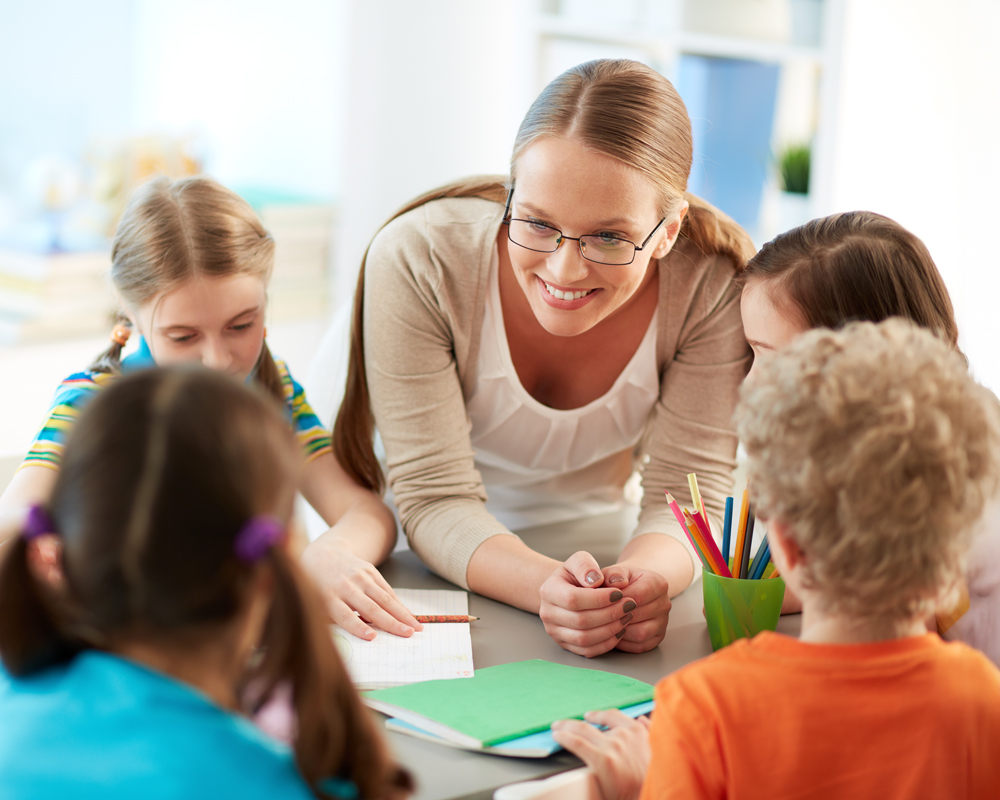
This is the brain’s “command centre” — a set of processes that allow a child to organise thinking, plan actions, and control impulses.
Why does it matter?
Research shows that well-developed executive functions are a stronger predictor of academic and life success than IQ. They enable a child to start, finish, switch, and draw conclusions — to act effectively in a world full of distractions.
Key competences
- Reading comprehension — analysing information and instructions
- Planning and sequencing — understanding the steps needed to complete a task
- Working memory — holding information in mind while acting
- Cognitive flexibility — switching efficiently between tasks or rules
The student in the world of technology

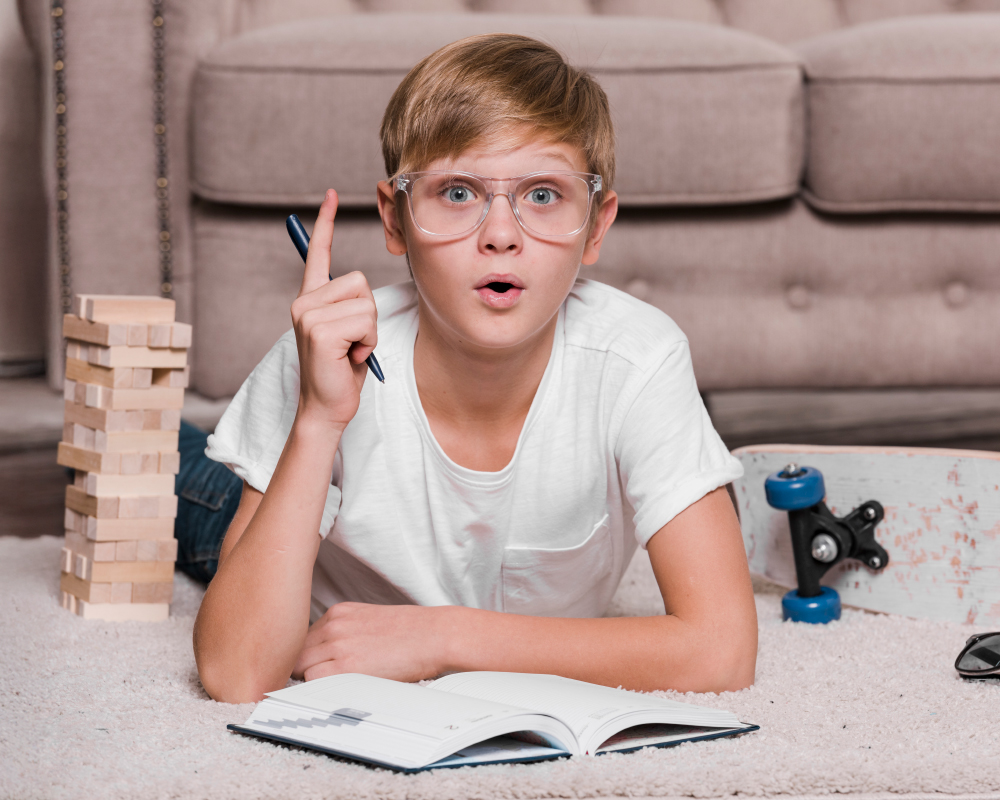
The world is changing faster than ever — and it will likely accelerate further. Our goal is not to make sure children don’t fall behind, but to help them use tools that haven’t even been invented yet.
We teach them to think, question, and doubt. The true skill of the future is not knowing a tool, but understanding when and why to use it. Artificial Intelligence shouldn’t replace thinking and creativity — it should stimulate them.
In a world where knowledge quickly becomes outdated, skills and the courage to try new ways of doing things play a key role. Acting not only alone but also as part of a team. We teach children that technology can support and connect. In the digital world, connection doesn’t end at the screen — it’s the ability to listen, understand, and act.
We show that technology has the greatest value when it helps people solve problems. We also teach principles of how to use it with empathy and respect for one another.
Key skills
- Critical thinking and information awareness
- Selecting methods and tools to suit needs
- Collaboration in digital environments
- Empathetic online communication and responsibility for words and relationships
Ways of working
- Visible thinking
- Project-based learning
- Design thinking
Our graduate

A graduate of our school is a child who…
…enters the world with confidence, curiosity, and the competences needed to find their place in any situation — in Poland and abroad. This is a student who:
- is fluent in English and knows a second foreign language (Spanish),
- thinks critically and creatively, and seeks new solutions with courage,
- can learn independently, understanding their own process of discovering the world,
- is empathetic, emotionally resilient, and socially responsible,
- can collaborate, make decisions, and persist in pursuing goals,
- feels confident in an international environment and is prepared for further education — both in Poland and abroad.
Additional Bilingual Classes
In addition to regular lessons, children take part in a wide range of activities conducted in both English and Polish, including:
- Drama & Speaking — confidence and communication, learning to express emotions and present ideas.
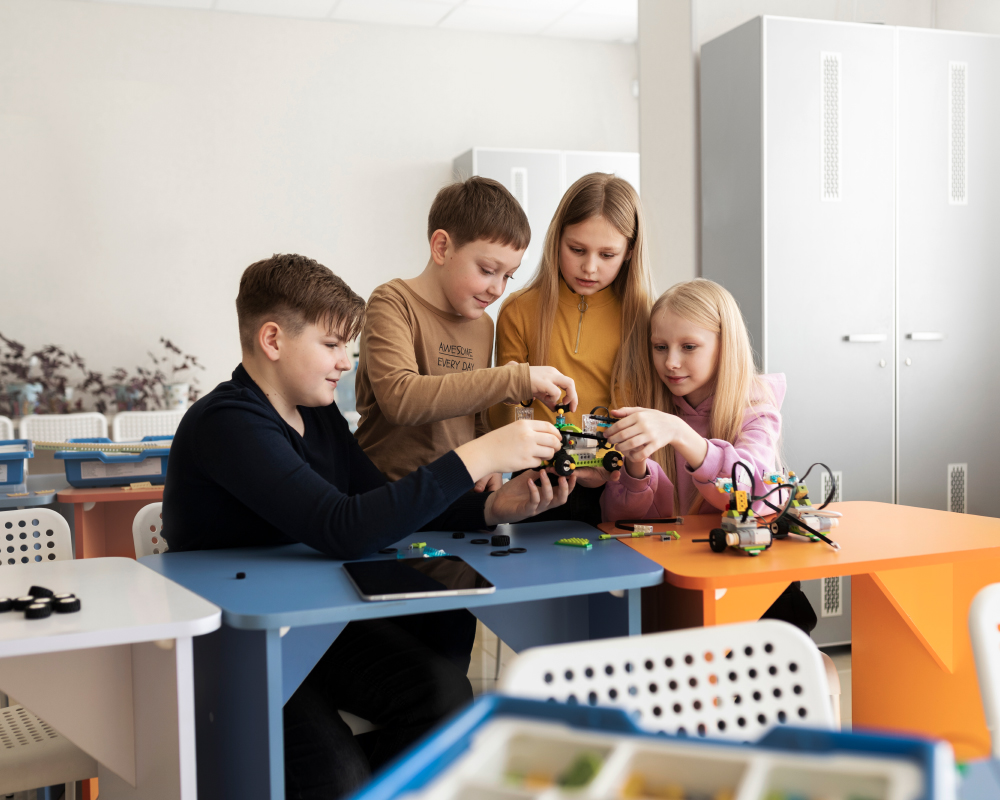
- Coding & Robotics — modern technologies, logical thinking, and creative problem-solving.
- Art Club — creative experimentation, combining art, imagination, and emotion.
- Science Club — experiments, discoveries, and scientific inquiry — the foundation of a true passion for exploring the world.
- STEAM Club — interdisciplinary projects combining science, technology, engineering, art, and mathematics.
- Debate Club — argumentation, critical thinking, and the courage to express opinions and listen to others.
As a result, language becomes a natural part of every area of life — from science and technology to art, emotions, and relationships.
Special Offer
To mark the opening of our school, we have prepared a promotion for families who reserve a place now for the 2026/2027 school year.
Regular price: 3200 2999 PLN
We have prepared an additional discount for KIDS&Co. graduates.
To receive the detailed price list, give us a call or leave your contact details. The Headteacher will get in touch with you and provide full information regarding the enrolment fee, extracurricular activities and meals.
Contact Us
Call us +48 534 000 125
Open Days
Open Days are a gathering for the whole family! While parents attend the presentation, children enjoy fun and safe activities.
Check datesLocation
The bilingual KIDS&Co. primary school will be located in a modern office building at 48 Domaniewska Street, Warsaw, in a convenient and accessible area.
DirectionsWrite to Us
If you couldn’t find the information you were looking for on our website or have any questions, please contact us — we’ll be happy to help!
Send a messageWork With Us
Join our team! Send us your CV and shortlisted candidates will be contacted by phone and invited for an interview.
Apply now