When and how to potty train your child? A practical guide for parents

Potty training is one of the most important moments in a child’s life – both from the perspective of their development and the everyday functioning of the entire family. Many parents ask themselves: when should I start potty training my child, how to do it step by step, and how to successfully potty train my child without stressing either the child or myself.
How to do it? In this article, we answer these questions and share practical tips that will help you successfully navigate the potty training process.
When is the best time to potty train a child?
Is there a right moment to start potty training? There is no one ideal age – most children are ready for potty training between 18 and 36 months of age, but each child develops at their own pace. The key is the child’s readiness signals, which indicate that the child is ready to start learning cleanliness.
According to the American Academy of Pediatrics (AAP), children usually begin to show signs of readiness for potty training at 18–24 months, which is an appropriate time to introduce the concept. It is important to remember that not every child at this age is ready to give up diapers. The AAP indicates that most children fully master life without diapers between 30 and 36 months of age, and only during the day. Therefore, parents should closely observe their child and wait for full readiness.
It is worth remembering that potty training should be done when the parent has time and can dedicate attention to the daily routine with the potty.
How to recognize a child’s readiness for potty training?
Before you decide to start potty training your child, make sure that the child is ready for it. Here are the key signs:
- The child signals physiological needs independently
- The child can keep a dry diaper for a few hours during the day
- The child shows interest in the toilet or potty
- The child tries to remove their diaper or pull-up pants
- The child does bowel movements at regular times
- The child shows a growing need for independence
If you notice such signs of readiness in your child, you can start planning the potty training process step by step.
Have any questions?
Choose your preferred method of contact — we’ll get back to you!
Potty training step by step – practical tips
1. Choose the right moment
It’s best if the timing of potty training falls during a period without major changes – such as a move or the arrival of a new sibling. If possible, plan the potty training process for warmer months when changing clothes is easier.
2. Ensure comfort
Buy your child their first potty – make sure it’s colorful, comfortable, and suited to their height. You can also offer the child to use the potty during routine and regular moments during the day, such as after meals or before bath time.
3. Observe and react
It’s worth sitting the child on the potty regularly, but without pressure. When the child starts using the potty, praise them for every success. If something doesn’t work out, stay calm. The child can see your anxiety! Potty training is a process that may take some time. Patience and calmness are key to successful potty training.
4. Be consistent
Potty training is a process – give the child time to learn and don’t go back to diapers when the first setbacks occur. Regularity is the foundation of successful potty training.
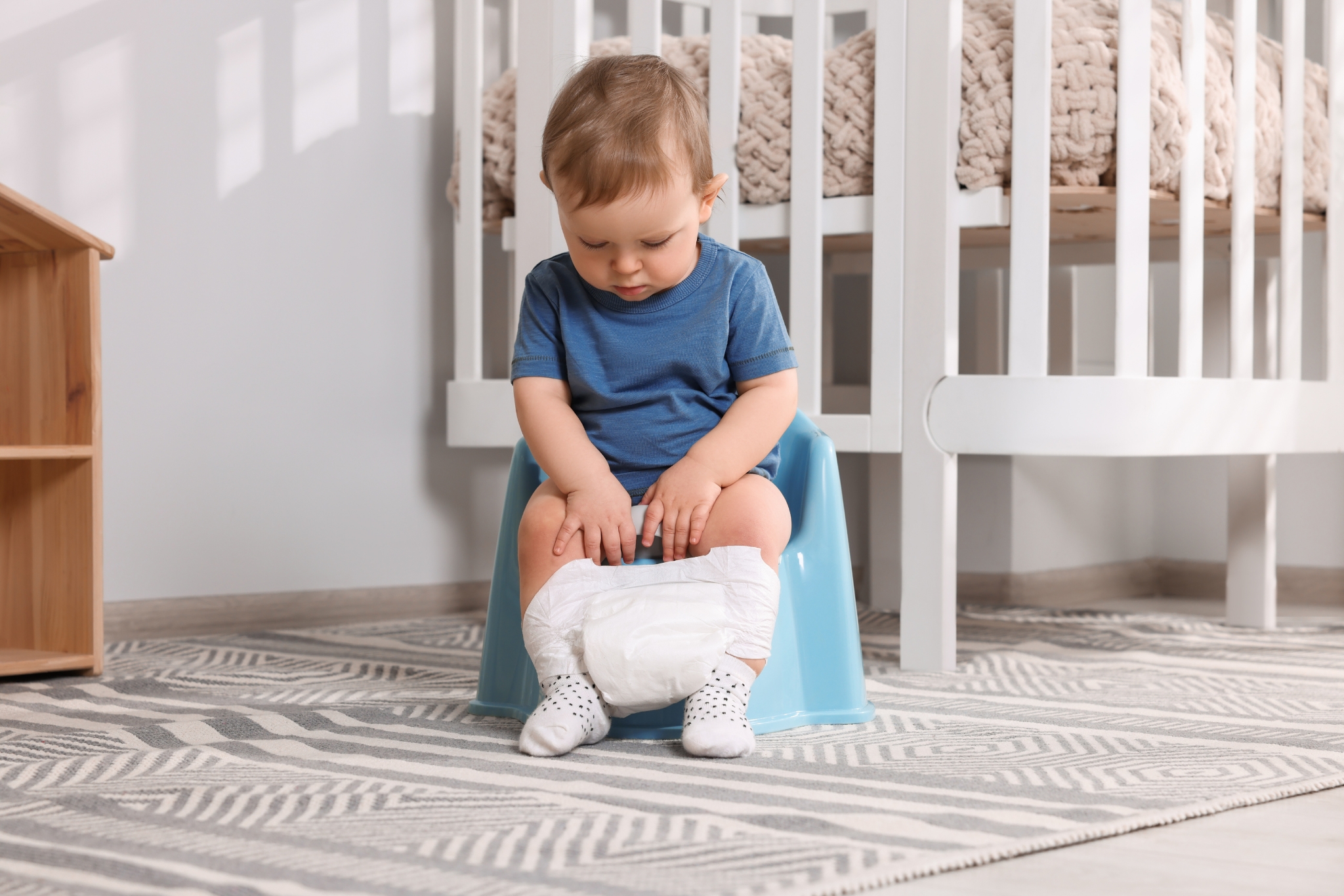
Potty training – how to teach a child to use the potty?
It’s important to teach your child to use the potty without pressure. Treat it as a form of fun, not an obligation. Encourage the child to sit on the potty, read books on the topic (e.g., “Kicia Kocia and Nunuś. On the Potty”) or sing songs related to potty training.
The potty training process is facilitated by routine – for example, in the morning after waking up, after naps, or after meals. This helps the child develop naturally.
How to effectively potty train a child?
Parents who want to potty train their child should remember that patience and a positive attitude are key. Here are some proven tips:
- Interrupting the child’s play for a potty break may effectively discourage them from using the potty. Try gently offering the potty when the child isn’t caught up in a fun activity
- Or offer themed games, for example, a teddy bear “learning” to use the potty with the child
- Give the child a choice, for example, “Do you want to go now or in a minute?”, which will reinforce their sense of agency
- Try to adjust clothing so the child can remove it by themselves
- Avoid comparisons with other children – each child develops individually
- Give the child space for successes and failures
If you want to potty train your child effectively – remember, your approach is crucial.
Daytime and nighttime potty training – are they the same?
No! Daytime potty training usually happens faster than nighttime potty training. For some children, it will take weeks or months before they sleep without diapers. How to teach your child to sleep without diapers? Here are a few tips:
- Limit drinking before bedtime
- Ensure a calm evening ritual
- Place the child on the potty before bed
For some children, a mattress protector or special covers may help.
How to potty train a child quickly?
Although many parents would like to potty train their child quickly, the most important thing is to do it wisely. Fast doesn’t mean effective – and sometimes too hasty actions lead to regression (Although it’s worth noting that temporary regression is a natural process that can occur. It shouldn’t be treated as a failure). The key to success is calmness, observation, and regularity. The potty training process can be lengthy, but it doesn’t have to be! Don’t set yourself up negatively before you even start potty training your child.
Summary
Potty training is an important step in a child’s development. Remember, each child has their own rhythm, and your support and patience are essential. Whether you plan to start potty training your child at two or three years old – first make sure your child shows readiness for potty training, then take it step by step with love and understanding.
If you want to learn more about child development stages and support them in their daily challenges, check out our other blog articles on KIDS&Co. Here are a few suggestions:
- Preparing your child for kindergarten – how to support your child during this important life stage?
- Problems with fine motor skills – when to see a specialist?
- How to prepare your child for their first day at daycare or preschool?
- The benefits of bilingualism acquired in childhood
Learn more about the KIDS&Co. kindergarten and nursery program. Our facilities are located in the following cities:
- private preschools and nurseries in Warsaw
- private preschools and nurseries in Wrocław
- private preschools and nurseries in Gdańsk
- private preschools and nurseries in Łódź
- private preschools and nurseries in Kraków
- private preschools and nurseries in Katowice
- private preschools and nurseries in Poznań
- private preschools and nurseries in Suwałki
- private preschools and nurseries in Ostrów Mazowiecka
- And from September, also private preschool and nursery in Gdynia
Let’s meet!
We invite all of you to an individual meeting with the headteacher. This will be a great opportunity to find out about our educational offer, ask questions, and visit the kindergarten. You can book one visit for a given day.