Overstimulation in children – how to recognize and calm an overstimulated child?
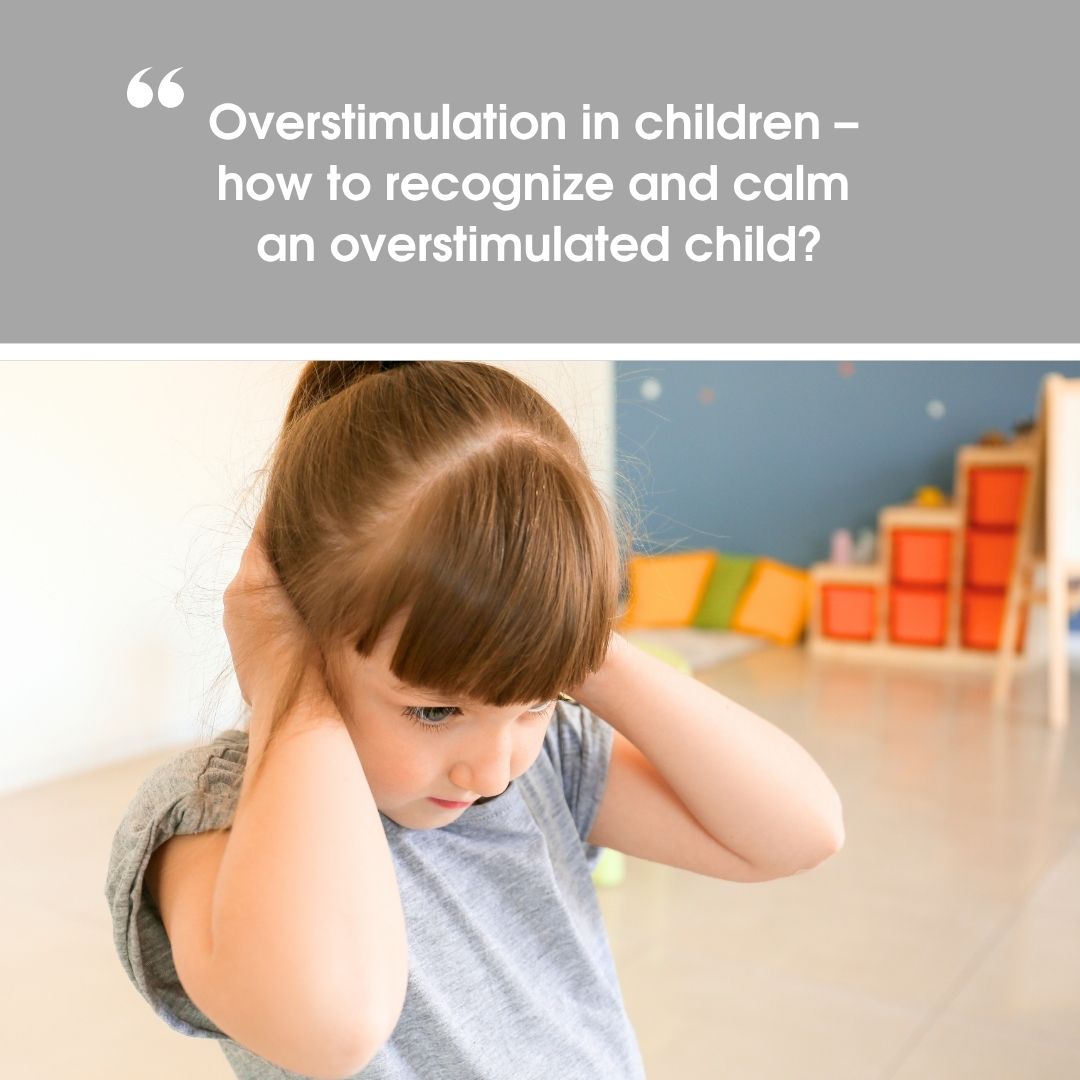
In today’s world, full of intense external stimuli, noises, emotions, and constant stimulation, we are increasingly encountering overstimulated children. Screens, toys emitting sounds and lights, the fast pace of life, and an overload of activities – all of this can lead to the overload of a child’s nervous system. Importantly, overstimulation in children leads to a range of difficult-to-interpret reactions. So how can we recognize the signs of overstimulation and help children cope with an excess of stimuli?
What is overstimulation and how does it affect a child’s development?
Overstimulation is a state in which a child’s brain receives more sensory, emotional, or cognitive stimuli than it can process. Overloading the nervous system often results in emotional outbursts, irritability, or conversely – total withdrawal. In children with heightened sensory processing sensitivity, this situation can occur more frequently and be more intense. An excess of stimuli leads to difficulties in the child’s brain in regulating emotions and behaviors, which is why it’s so important to reduce the number of stimuli in a child’s daily environment.
See: Webinar on YouTube: Overstimulation – Why Does My Child Not Listen?
Signs of overstimulation in children – what to watch out for?
Have any questions?
Choose your preferred method of contact — we’ll get back to you!
Meltdown – emotional explosion
Meltdown is a sudden emotional reaction from a child who can no longer cope with excessive stimuli. Crying, screaming, hysteria, aggression – these behaviors are the result of information overload, not “bad behavior.” This state can appear right after returning from kindergarten or a noisy place. It’s important to give the child time and space to regain balance on their own.
Shutdown – quiet withdrawal
On the other hand, shutdown is a subtle form of overstimulation – the child withdraws, does not respond, avoids contact, and “shuts down” emotionally. While they may appear calm, their body is actually protecting itself from another dose of stimuli. These behaviors in overstimulated children are often confused with shyness or obedience.
Autostimulation as a form of self-regulation
Stimming, or repetitive movements (such as rocking, tapping, waving hands), is a way to calm down and regain control over the body. Supporting children with sensory issues includes accepting safe forms of autostimulation, especially if it helps the child calm their nervous system and reduce tension.
Other signs of overstimulation
- excessive irritability and mood swings
- difficulty falling asleep, lack of sleep
- impulsiveness and frustration
- stomach or head pain without medical causes
- avoiding physical or eye contact
- excessive sensory stimuli causing muscle tension (e.g., clenching fists)
An excessive amount of stimuli can also disrupt the sleep cycle – children may have trouble calming down before bed, wake up at night, or refuse naps. It’s worth analyzing the number of external stimuli the child was exposed to during the day.
What leads to overstimulation?
- too many screens and electronic gadgets (read: “The Role of Technology in Early Childhood Education. Does Technology Support Development?”)
- lack of a consistent routine and daily structure
- noisy, dynamic environments (e.g., shopping malls, large crowds)
- overly intense stimulation (both physical and emotional)
- too many responsibilities and physical activities

How to calm an overstimulated child?
1. Create a safe space
A quiet place without visual and auditory stimuli helps the child calm their nervous system. This could be a reading nook, a sensory tent, or simply a shaded room.
2. Use relaxation techniques
Diaphragmatic breathing, gentle massage, relaxing music, or sensory play are effective tools that support the child’s development and help with calming down.
3. Introduce rituals and routine
Children need time to adapt to a changing environment. Repetitive activities give them a sense of security, which helps reduce excess stimuli.
4. Encourage movement
Physical activity – a walk, sensory gymnastics, or playing outdoors – helps release tension and reduce overstimulation.
5. Respect the child’s needs
Allow the child to take breaks when needed. Give them time to regenerate – this is often the most effective form of support.
When to consider specialized support?
If the signs of overstimulation persist for a long time, it’s worth considering therapy with a specialist in sensory integration disorders. SI therapy, conducted by experienced professionals, can be an effective solution for children with sensory sensitivity, emotional disturbances, or difficulties in everyday functioning. Sometimes a broader approach is needed, including early signs of autism or sensory processing disorders.
Summary
An excessive amount of stimuli in a child’s environment is unfortunately a common reality today. Overstimulation and sensory overload should not be ignored – they are real challenges that impact a child’s development, behavior, and mental health. Supporting children with sensory issues requires attentiveness, understanding, and empathy. Properly selected techniques and limiting excess stimuli are the key to ensuring optimal development and emotional balance for children.
Learn more about the KIDS&Co. kindergarten and nursery program. Our facilities are located in the following cities:
- private preschools and nurseries in Warsaw
- private preschools and nurseries in Wrocław
- private preschools and nurseries in Gdańsk
- private preschools and nurseries in Łódź
- private preschools and nurseries in Kraków
- private preschools and nurseries in Katowice
- private preschools and nurseries in Poznań
- private preschools and nurseries in Suwałki
- private preschools and nurseries in Ostrów Mazowiecka
- And from September, also private preschool and nursery in Gdynia
Let’s meet!
We invite all of you to an individual meeting with the headteacher. This will be a great opportunity to find out about our educational offer, ask questions, and visit the kindergarten. You can book one visit for a given day.